
Table of Contents
ToggleA TV in a small living room can feel like the tail wagging the dog, suddenly your entire layout revolves around a single appliance, and floor space vanishes. But it doesn’t have to. The key to fitting a TV into a compact room without sacrificing comfort or style lies in three principles: mounting smart, arranging furniture with intention, and treating the TV as one element of the room rather than its focal point. Whether you’re working with a tiny living room, a cozy apartment, or a studio, the strategies in this guide will help you reclaim precious square footage while keeping your entertainment setup functional and visually balanced.
Key Takeaways
- Wall-mounting your TV reclaims 12–18 inches of floor depth and frees up precious square footage in small living rooms without sacrificing comfort or style.
- Position your TV on the wall opposite your seating area at eye level (55–60 inches from floor to center) and use a tilting bracket to reduce neck strain and glare.
- Arrange furniture intentionally with L-shaped or floating configurations to maintain an open sight line between seating and the TV while keeping the room socially balanced.
- Multi-functional pieces like ottomans with hidden storage and floating shelves (6–8 inches deep) maximize usable space without adding visual clutter to small living room ideas with TV.
- Hide cables inside wall conduit or cable raceways to eliminate visual chaos and create a finished, intentional look that makes compact spaces feel larger and more polished.
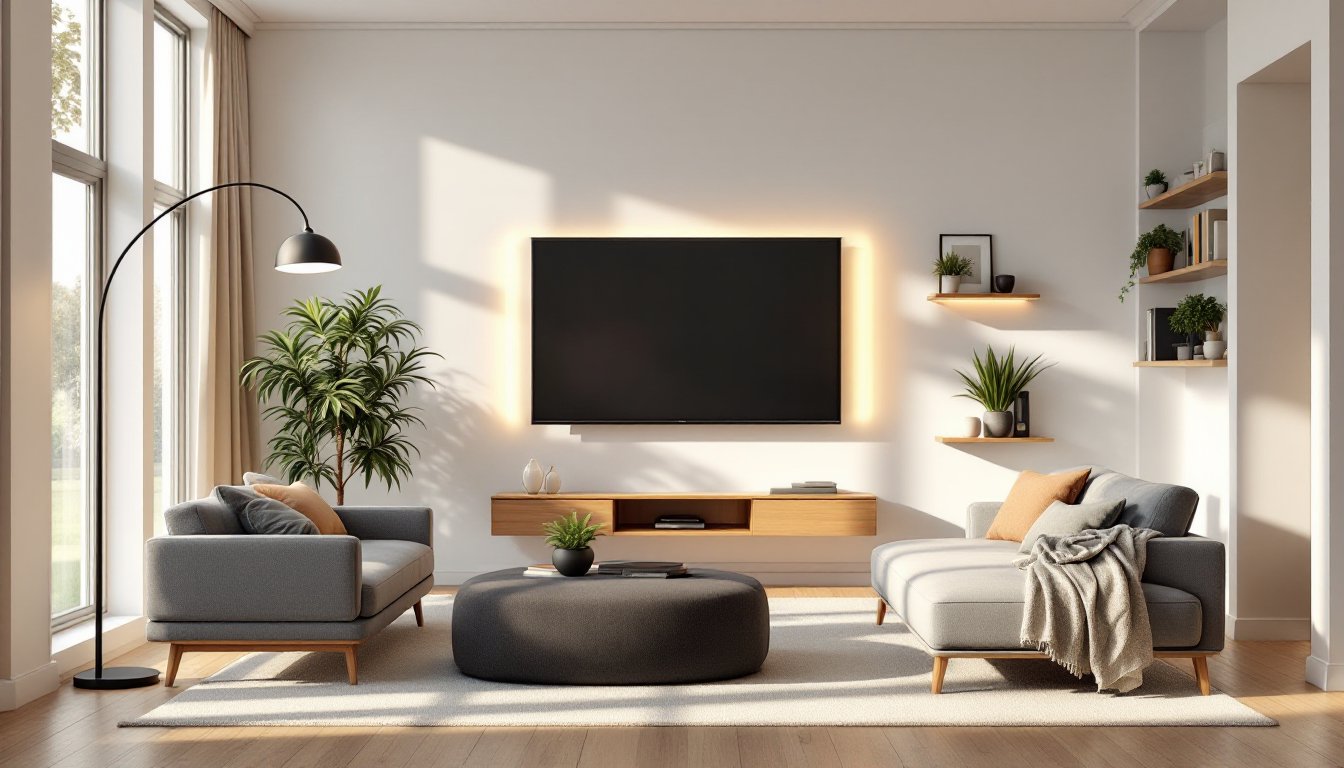
- Balance the TV’s visual weight with layered lighting—bias lighting behind the mount, corner floor lamps, and strategic decor like framed art or plants on either side of the screen.
Wall-Mount Your TV to Reclaim Floor Space
Wall-mounting is the simplest way to free up floor real estate in a small living room. Instead of a bulky TV stand consuming 12–18 inches of depth, you’re using vertical wall space that would otherwise sit empty. The payoff: an instant gain in usable floor area for a coffee table, chair, or just breathing room.
Choose the Right Wall and Setup
Start by picking the wall opposite your seating. If you have multiple seating options, the best wall is the one where most people will face when sitting. Avoid mounting directly opposite windows, glare will plague your viewing experience, especially in daytime hours.
Before drilling, locate the studs in your wall. Use a stud finder ($15–30) and mark them with a pencil: TV mounting brackets bolt to studs to handle the weight safely. Standard wall studs are spaced 16 inches apart on center (OC), so once you find one, the others are predictable. For TVs under 55 inches, a single pair of studs works: larger screens should span at least two studs for stability.
Choose a full-motion or tilting bracket rather than a fixed one if your seating varies. A tilting mount ($40–80) lets you angle the screen down slightly, reducing neck strain and glare. Install the bracket at eye level when seated, typically 55–60 inches from floor to center of screen, though this varies with seating distance. Measure twice before making holes: moving a wall mount is a chore.
Run cables down the wall behind the mount, not across it. If your room doesn’t have a wall outlet near the TV, hire a licensed electrician to install one or use a power conduit along the wall to hide extension cords and cables neatly.
Furniture Arrangement That Works With a TV
In a small living room with a TV, furniture placement can make or break your space. The goal is to create a conversation-friendly layout that doesn’t force everyone to sit in uncomfortable angles just to see the screen.
Start with your seating. A single sofa facing the TV is the obvious choice, but consider an L-shaped configuration: place a loveseat or compact sofa perpendicular to an accent chair angled slightly toward both the TV and the seating area. This arrangement keeps the room feeling social while accommodating the TV naturally. If a second seating piece is overkill, a single armchair in the corner can work, just make sure it has a decent view angle.
Keep the zone between seating and TV clear. Avoid placing side tables, bookshelves, or console tables in this sight line: even a tall plant can create visual clutter that makes the room feel cramped. Instead, push storage and decor to the walls perpendicular to the TV wall, or tuck a shallow console table (12–14 inches deep) against the wall below the mount for remotes and media devices. This approach, popular on sites like Young House Love, balances function with open floor space.
If your room is very narrow, consider floating the sofa away from the wall by 12–18 inches. This creates an illusion of depth and lets you place a thin console or shelving behind it for storage without blocking walkways. In a really tight space, every inch counts, choose furniture with exposed legs rather than a solid base, which visually lightens the room and makes it feel larger.
Multi-Functional Seating and Storage Solutions
In small living room design, every piece of furniture needs to earn its spot. Multi-functional pieces aren’t just practical, they’re essential.
Look for an ottoman with hidden storage. These double as footrests, extra seating, and a place to stash blankets, remotes, or board games. Pick one in a neutral tone (gray, beige, or charcoal) that won’t visually compete with the TV. Dimensions matter here: aim for 18–24 inches wide and 18 inches deep so it doesn’t dominate the viewing area.
Storage benches at the foot of a bed (if your living room doubles as a bedroom) or along an unused wall serve the same purpose. Look for vertical shelving on the wall perpendicular to the TV, a narrow bookshelf or floating shelves (6–8 inches deep) won’t eat into floor space and can hold books, plants, or decorative objects that balance the visual weight of the TV. MyDomaine frequently showcases how small living room interior design benefits from vertical thinking, stacking storage upward rather than spreading it outward.
If you need a media console for cable boxes, gaming systems, or streaming devices, choose one that’s open-leg design with a depth of 14–16 inches. Wall-mounting these components is even better, use a narrow floating shelf to hold gear, which saves floor footprint entirely. Cable management boxes keep wires corralled and hidden, making the whole setup look intentional rather than chaotic.
Lighting and Decor to Balance the TV Visually
A TV is a dark rectangle. Without thoughtful lighting and decor, your small living room becomes a cave that orbits the screen. The fix: balance its visual weight with layered lighting and strategic decor placement.
Install bias lighting behind the TV, an LED strip ($15–40) that softly illuminates the wall behind the mount. It reduces eye strain during evening viewing and makes the TV feel less like a black hole in your room. Warm white (2700K–3000K) is most forgiving: avoid cold blue light, which clashes with the TV’s glow.
Add a floor lamp or table lamp in the corner opposite the TV. A arc lamp works beautifully in tight spaces because it occupies minimal floor footprint while casting light across the seating area. Use dimmers if possible, they let you adjust ambiance for movie watching without losing function for reading or conversation.
Decor matters too. Apartment Therapy demonstrates that small cozy living room ideas thrive when the TV area feels intentional. Add a framed piece of art or a floating shelf with plants on either side of the TV mount. These elements break up the black screen and make the wall feel curated rather than dominated by electronics. Keep the accessories minimal, three items per side is a good limit, so the room doesn’t feel cluttered.
Choose a light, neutral paint color for walls and a slightly darker accent color for the TV wall. A soft gray or warm white backdrop makes a TV less visually jarring than stark white or dark paint, which draws too much attention to the screen.
Cable Management and Hidden Wiring
Tangled cables and exposed wires are the enemy of small living room spaces. They create visual chaos and make even tidy rooms feel cramped. A few strategic interventions eliminate this headache.
Run cables inside a conduit or cable raceway (adhesive-backed plastic tubing, $10–20 for 6 feet) down the wall behind or alongside the mount. These channels are available in white, black, or wood finishes to match your wall. They hide the mess and give installation a finished, built-in look. Paint the raceway the same color as your wall if possible, it virtually disappears.
If you’re mounting the TV on drywall without studs behind for a cable pass-through, use a in-wall rated cable kit. Run low-voltage cables (HDMI, audio, network) inside the wall if local electrical codes permit: check with your local building department first, as codes vary by jurisdiction. High-power cables (TV power) should never run inside walls, they create fire hazards. Keep them in a visible conduit instead.
Behind the TV, use velcro cable ties or spiral wrap to bundle HDMI, power, and audio cables neatly. Label each cable with a label maker ($15–30) on both ends so you can swap gear without guessing. A power strip with surge protection mounted to the wall bracket or behind the TV keeps multiple plugs in one place, neater than a rats nest of individual cables snaking across your furniture.
For a truly clean look, wall-mount your cable box, streaming device, or gaming console on a floating shelf or bracket beside the TV, then run its cables down the conduit. This keeps your media console free of clutter and makes cable tracing simple if you ever need to troubleshoot.
Conclusion
A TV doesn’t have to dominate a small living room, it just needs smart planning. Wall-mounting saves floor space, intentional furniture arrangement keeps the room social, multi-functional pieces earn their keep, layered lighting balances the screen’s visual weight, and clean cable management ties it all together. Small living room ideas with TV work best when the set feels like one thoughtful part of the space, not the reason the room exists. Start with mounting, follow with arrangement, and build outward. Your tiny living room can be both functional and inviting.


