Table of Contents
ToggleWhether you’re facing a leaky faucet, cracked drywall, or a rotting deck board, hiring the right handyman in Baltimore can save you time, money, and frustration. Homeowners often struggle to know when to tackle a project themselves versus calling a pro, and then, if they decide to hire someone, how to find a trustworthy, competent professional. This guide walks you through identifying what kind of work suits your skill level, what handyman services are actually available in Baltimore, how to vet contractors, and what to do before the work begins.
Key Takeaways
- Knowing when to hire a professional handyman in Baltimore versus tackling a DIY project depends on structural complexity, permitting requirements, and potential resale impact—structural repairs, gas lines, and electrical work require licensed professionals.
- When selecting a handyman in Baltimore, collect at least three estimates, verify general liability insurance and business licensing, and check references and online reviews to identify reliable contractors.
- Handyman services in Baltimore cover everything from basic repairs like faucet fixes and drywall patching to specialty work including kitchen renovations, deck building, and vintage home restoration.
- Clear communication before work begins—including a detailed project scope, realistic timelines, warranty terms, and payment structure—ensures a smooth experience and protects both you and the handyman.
- Prepare your work area by clearing furniture, protecting floors, and shutting off utilities as needed, then conduct a walk-through at completion to verify quality before finalizing payment.
When To Hire a Professional Handyman vs. DIY
The line between a DIY project and a job for a pro isn’t always obvious. A handy neighbor might tackle minor cabinet adjustments or paint touch-ups, but structural repairs, electrical work, plumbing that requires city permits, and gas-line work belong in the hands of licensed professionals. Maryland follows the International Residential Code (IRC), and Baltimore enforces local amendments, some repairs trigger permit requirements whether you like it or not.
Here’s the honest breakdown: if the project involves structural integrity (load-bearing walls, roof repairs), gas or water lines, electrical service beyond replacing outlets, or anything that could affect resale value, hire a pro. If you’re uncertain about permits, contact Baltimore’s Department of Housing and Community Development. Many DIYers discover mid-project that they should have called someone first, that’s expensive and frustrating.
Small repairs like fixing squeaky hinges, caulking gaps, patching nail holes, or adjusting door hardware are fair game for most homeowners. Medium-difficulty jobs, installing shelving on studs, simple tile backsplash, basic drywall patching, work if you’ve got some experience and the right tools. Everything else is conversation-starter territory for a handyman.
What Handyman Services Are Available in Baltimore
Baltimore’s handyman market is competitive. You’ll find everything from one-person operations to larger firms that handle commercial work too. The range of services available in the city is broad, but your job is to match the right contractor to your specific task.
Common Repairs and Maintenance Tasks
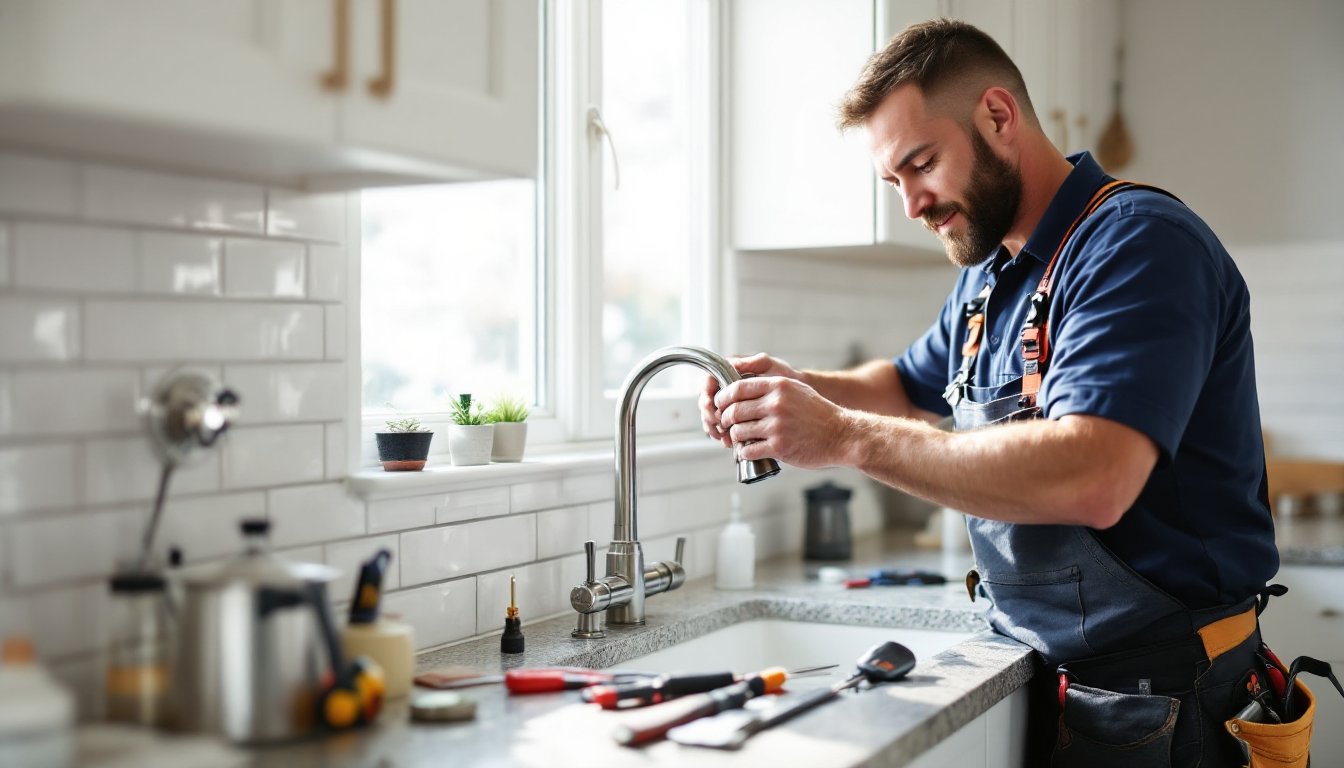
Most handymen in Baltimore handle bread-and-butter repairs: fixing leaky faucets and running toilets, patching drywall, interior and exterior painting, caulking, weatherstripping, door and window adjustments, cabinet hardware replacement, and basic carpentry. They’ll also tackle trim work, install towel bars or shelving, fix squeaky floors, replace light fixtures (that don’t involve rewiring), and handle minor plumbing like replacing faucet aerators.
These are the tasks that eat up weekends but don’t require a licensed electrician or plumber. A qualified handyman should be competent with basic hand and power tools, circular saws, drills, level, stud finder, tape measure, and comfortable reading plans and measuring accurately. Response times vary: some Baltimore handymen do emergency calls, while others book weeks out during spring and fall.
Specialty Services and Renovations
Beyond quick fixes, many Baltimore handymen offer kitchen and bathroom updates, flooring installation (depending on the material), deck building or repair, fence work, and basement finishing. Some focus on vintage homes, Baltimore has plenty of them, and understand plaster walls, old window restoration, and knob-and-tube electrical considerations. A few have tile experience, crown molding expertise, or specialty finishing skills. If your project is renovation-scale, ask directly whether a handyman handles that scope: some prefer smaller jobs, while others build their business on larger contracts. Top-rated handymen in Baltimore, found through platforms like Angi’s list of handymen in Baltimore, often advertise their specialties upfront.
How To Choose the Right Handyman for Your Project
A cheap quote is not a deal if the work falls apart in six months. Start by defining your project clearly, write it down, take photos, and note any materials you want used. Then collect at least three estimates from handymen willing to visit your home and assess the work in person.
Check credentials: in Maryland, handymen aren’t required to be licensed like electricians or plumbers, but they should carry general liability insurance and have a business license. Ask for proof. Check references, not just a name and number, but ask specifically about time management, cleanliness, and follow-up if issues arose. Online reviews on Google, Yelp, and the Better Business Bureau reveal patterns: one bad review isn’t a red flag, but three saying “never returned to fix the problem” is.
Ask about timelines and communication. A good handyman gives you a realistic start date, keeps you updated if delays happen, and stands behind their work with a warranty (typically 30–90 days). Discuss payment terms before work starts, many Baltimore handymen require a deposit (often 30–50% of the estimate) and the remainder upon completion. Don’t pay cash for large jobs without documentation: a paper trail protects both of you.
Resources like HomeAdvisor’s cost estimation tools and ImproveNet’s contractor resources help you benchmark pricing and find local professionals, though always verify reviews independently. Trust your gut: if a contractor is evasive about insurance, won’t provide references, or pressures you to decide immediately, walk away.
What To Expect and How To Prepare
Once you’ve hired a handyman, set yourself up for success. A week before work starts, clear the work area, move furniture, protect floors and fixtures with drop cloths, and remove items from cabinets if that’s where work happens. Shut off water or electricity if that’s relevant, and let the handyman know about any quirks (doors that stick, finicky light switches, or where the breaker panel lives).
On the day of work, confirm the start time the evening before. When the handyman arrives, walk through the project together, point out any concerns you noticed since booking, and agree on what “finished” looks like. If the original estimate didn’t cover something that’s now visible (hidden damage, unexpected asbestos, or additional materials), discuss it and get it in writing before work proceeds.
Stay available if you can, but don’t hover. A good handyman works efficiently and will ask questions as needed. Once the work is done, do a walk-through together, check paint coverage for drips, ensure shelves are level, test the faucet or door multiple times. If something isn’t right, point it out immediately. Most pros will correct minor issues on the spot or within a reasonable window.
Documentation matters: get a receipt showing what work was done, materials used, and cost. Many handymen provide warranties on parts: write down the terms. If major work happens (like roof or electrical), ask if a permit was pulled and whether an inspection passed, this affects your homeowner’s insurance and resale value.
Conclusion
Hiring a handyman in Baltimore doesn’t have to be intimidating. Know your project scope, vet contractors thoroughly, and communicate clearly before work begins. The right pro saves you time and prevents costly mistakes, and sometimes, the best DIY project is knowing when to hand it off to someone else.